
The Bombay Stock Exchange on Monday crossed the one trillion dollar milestone in terms of market capitalisation of all the companies listed on the bourse on the back of soaring share prices and an appreciating rupee.

India's stock exchanges have decided to jointly introduce the T+1 settlement cycle in phases from February 25, beginning with the bottom 100 stocks by market capitalisation. From March 2022, on the last Friday (or the immediate next trading day) of every month, the next 500 stocks from the bottom will be subject to T+1 settlement. The phase-wise implementation is expected to give all market participants, including foreign portfolio investors (FPIs), ample time to shift to the shorter cycle. The settlement cycle represents the time period within which the stock exchanges have to settle security transactions.

Of the top 10 valued firms, eight including Reliance Industries, Tata Consultancy Services (TCS), HDFC Bank, Hindustan Unilever Ltd, HDFC and ITC witnessed gains in their market valuation. From the top-10 pack, the valuation of HDFC Bank jumped Rs 31,553.45 crore to Rs 929,752.54 crore.

Of these 26, Bajaj Finance, Associated Alcohols and Breweries, Garware Technologies, Filatex India, Tasty Bite Eatables, Aarti Industries and GMM Pfaudler saw an over 10-fold surge in price since 2014.

India's financial sector is dominated by large government-owned and private-sector banks.

As the Indian equities signed off 2019 on a remarkable note, the m-cap of BSE-listed companies rose by Rs 11,05,363.35 crore to Rs 1,55,53,829.04 crore.
India and Pakistan have posted the highest gains among developing Asia-Pacific equity markets, posting much stronger returns than those in 2004

To curb excessive volatility in mid and small cap counters, the BSE has introduced a new surveillance measure for certain stocks having a market capitalisation of less than Rs 1,000 crore. The new measure, add-on price band framework, will be applicable to companies with a market-capitalisation of less than Rs 1,000 crore and on securities in groups -- X, XT, Z, ZP, ZY, and Y, BSE said in a circular on Wednesday. Under the framework, the shortlisted securities will be subjected to additional periodic price limits of weekly, monthly and quarterly.
Whether it is a large-cap or a mid-cap stock, investors must research the company and align their investment horizon with the management's long-term outlook of the business to make reasonable returns.

Micro-cap stocks are in the line of fire as market regulator Securities and Exchange Board of India (Sebi) is tightening its noose around investment in small-cap stocks. Given this, analysts suggest investors exit the segment, at least, for the time being. Independent market analyst, Ambareesh Baliga, for instance, said that regulators have gotten worried on the valuation front, though belated, which could prove to be the last straw on the camel's back.

Top ten banks of the world includes 4 from the USA, 4 from China and one each from the UK and Australia
The total market capitalisation of all the listed Indian firms had first crossed the one trillion dollar mark more than a year ago on May 28, 2007 and had grown to near $1.9 trillion early this year in January. However, a sharp plunge since the Sensex peaked at its all-time high of 21,206.77 points on January 10, coupled with a significant depreciation in the Indian currency versus the dollar, pulled back the total market capitalisation to below $1-trillion mark.

The mystery surrounding the alleged fund diversion from Zee Entertainment Enterprises (Zee) by founders Subhash Chandra and Punit Goenka has thickened with speculations of an amount multiple times higher than that cited by the ex-parte interim order passed by the Securities and Exchange Board of India (Sebi) dated June 12, 2023. While Zee shares witnessed a fresh selloff on Wednesday, news reports of accounting fraud left investors guessing about the hole in the media broadcaster's books. An order by the Securities Appellate Tribunal (SAT) in October 2023 had clearly hinted that Sebi's investigation had found a deeper rout.
Investor wealth slumped by Rs 3.7 lakh crore on Monday, as the equity market recorded its biggest single-day fall in two months.
An interview with Zhan Xiangyang, director general of the world's third largest bank, with a market capitalisation of $183.85 billion.

'Trump administration wanted a positive tone at this summit, but there was still some anxiety that there could be some awkward moments -- and there were not.'

State-owned companies have been set stiff targets to increase accountability as they get ready for divestment. Nikunj Ohri explains why meeting them will be challenging.
From the 30-share Sensex pack, 26 scrips closed with gains led by Tata Motors that zoomed 16.63 per cent after the company reported narrowing of losses in the September quarter.

India is world's one of the biggest e-commerce markets.

From the Sensex pack, 25 scrips were trading with gains led by Yes Bank, IndusInd Bank, L&T, SBI, ICICI Bank, Kotak Bank and RIL.

Notwithstanding robust volume growth and a strong performance from Jaguar Land Rover (JLR), Tata Motors, the country's second-largest automobile (auto) manufacturer by market capitalisation, disappointed the Street with its January-March quarter (Q4) results for 2023-24 (FY24). While consolidated revenues saw a 13 per cent increase, lower-than-expected realisations in the Indian operations weighed down overall performance.

Stocks below a certain size in terms of market capitalisation don't attract much institutional interest

The market capitalisation of BSE-listed companies reached an all-time high of Rs 261.73 lakh crore on Thursday, helped by a massive rally in the equities where the benchmark Sensex zoomed 958 points to end at a fresh lifetime peak. The 30-share BSE benchmark jumped 958.03 points or 1.63 per cent to settle at its new closing peak of 59,885.36. During the day, it gained 1,029.92 points to touch an intra-day record high of 59,957.25.

Investor confidence in unlisted shares was shaken after recent developments that saw online drugstore PharmEasy issuing new shares in a rights issue at a 90 per cent discount to its previous valuations and Reliance Retail's move to buy back and cancel shares held by public investors. Both stocks were, at one time, very popular in the unlisted market, with canny investors cornering them with the objective of benefiting from their listing. "Since investors have suffered losses on both counts, they will be careful when it comes to dealing in shares of unlisted companies," observes a broker dealing in unlisted shares, adding that there will be some rationality to the pricing.

Stocks of Hindustan Petroleum Corporation Limited (HPCL), Bharat Petroleum Corporation Limited (BPCL) and Indian Oil Corporation Limited (IOCL) have more headroom left despite the sharp run in the last few weeks, suggests a recent report from Morgan Stanley. Stocks of these oil refining and marketing companies (OMCs), it believes, are seeing multiples re-rate as investors reassess long-term growth prospects. "IOCL trades at one year forward P/BV of 1.2x, 19 per cent below +1 standard deviation (SD); BPCL trades at one year forward P/BV of 1.5x, near historical averages; HPCL trades at one year forward P/BV of 1.5x, near +1SD," Morgan Stanley said.
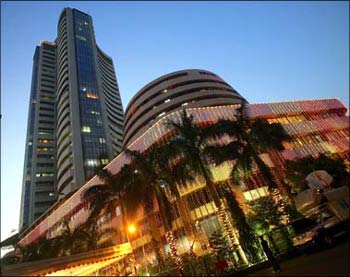
The total market capitalisation of BSE listed companies stood at Rs 1,01,68,542 crore.

Nine of the top 10 most valued companies witnessed a combined erosion of Rs 1,63,510.28 crore in market valuation last week, with Reliance Industries emerging as the biggest laggard.

From its lows this month, the stock of Sona BLW Precision Forgings is up 10 per cent on better-than-expected results. The stock rose by 4 per cent in the trading session on Tuesday after Japan's Nikkei Group said the Indian automotive component major has topped its rankings in terms of competitive advantage. The rankings are based on sales, profit margin, capital expenditure, research and development, and market capitalisation.

As many as 86 per cent of senior business executives have deployed artificial intelligence (AI) to enhance revenue streams or create new ones, said a report by Tata Consultancy Services (TCS) on Wednesday. As many as 69 per cent of businesses are more focused on using AI for innovation and increasing revenue than on improving productivity and optimising cost, said the 'TCS AI for Business Study'.

'IPOs have performed exceptionally well, with a notable increase in average ticket size from Rs 800 crore in the last financial year to around Rs 1,300 crore in this financial year.'

Higher valuation creation in companies beyond the top 100 has given the domestic markets a shot at a $4 trillion market capitalisation (mcap) - a club exclusive to three countries currently. On November 23, the mcap of all BSE-listed stocks finished at a new record of Rs 328.33 trillion ($3.94 trillion), despite the benchmark indices ending with losses. The mcap was propelled by gains in the broader market, including small and midcap stocks - a trend dominant this year.

Seems daunting? With right financial planning, patience, and commitment, this goal is entirely achievable, says Ramalingam Kalirajan. Here's how

The markets are in bubble territory.

Investor wealth eroded by Rs 6.59 lakh crore on Monday as equities tanked after the UK reported a new strain of the COVID-19 virus. The 30-share BSE Sensex plunged 1,406.73 points or 3 per cent to close at 45,553.96. The benchmark hit an all-time high of 47,055.69 during the session. Following the sharp selling, the market capitalisation of BSE-listed firms plummeted by Rs 659,313.65 crore to Rs 1,78,79,323.05 crore.

rediffGURU Ulhas Joshi answers your personal finance and mutual fund queries
The ongoing stock market turbulence does not seem to have affected much the country's top corporate houses, with the collective valuation of biggest five of them growing by over $100 billion in the fiscal ended on March 31. The worth of India's five most-valued business houses, as measured by market capitalisation of their listed group firms, stood at $ 290.1 billion (Rs 11,61,000 crore) at the end of Monday's trading.

Power Grid Corporation of India (PGCIL) was one of the top Sensex gainers in trade on Monday, ending with gains of nearly 9 per cent. The stock has gained about 42 per cent year-to-date. For the March quarter, the company reported a revenue of Rs 12,000 crore, which was down 3 per cent year-on-year (Y-o-Y) but up 4 per cent quarter-on-quarter (Q-o-Q). The drop was on account of one-time arrears related to the Nagapattinam tariff bid competitive bidding (TBCB) project in Q4 FY23.

NSE Indices Ltd, an arm of the National Stock Exchange (NSE), on Tuesday launched the country's first-ever Real Estate Investment Trusts and Infrastructure Investment Trusts index -- Nifty REITs and InvITs Index. The index aims to track the performance of REITs and InvITs that are publicly listed and traded on the NSE, the exchange said in a statement. A real estate investment trust (REIT) or an infrastructure investment trust (InvIT) is an investment vehicle that owns revenue-generating real estate or infrastructure assets.
